


The companies laying people off because of AI have one thing in common. They were already stuck before the models got good. AI didn’t create their problem. It gave them a clean way to announce it.
Doing the same thing with fewer people is not a transformation. It is a managed decline with better PR. And the people who pay for it are the ones who showed up every day trying to do good work inside a company that had already stopped believing in itself.
If that’s you, keep reading.
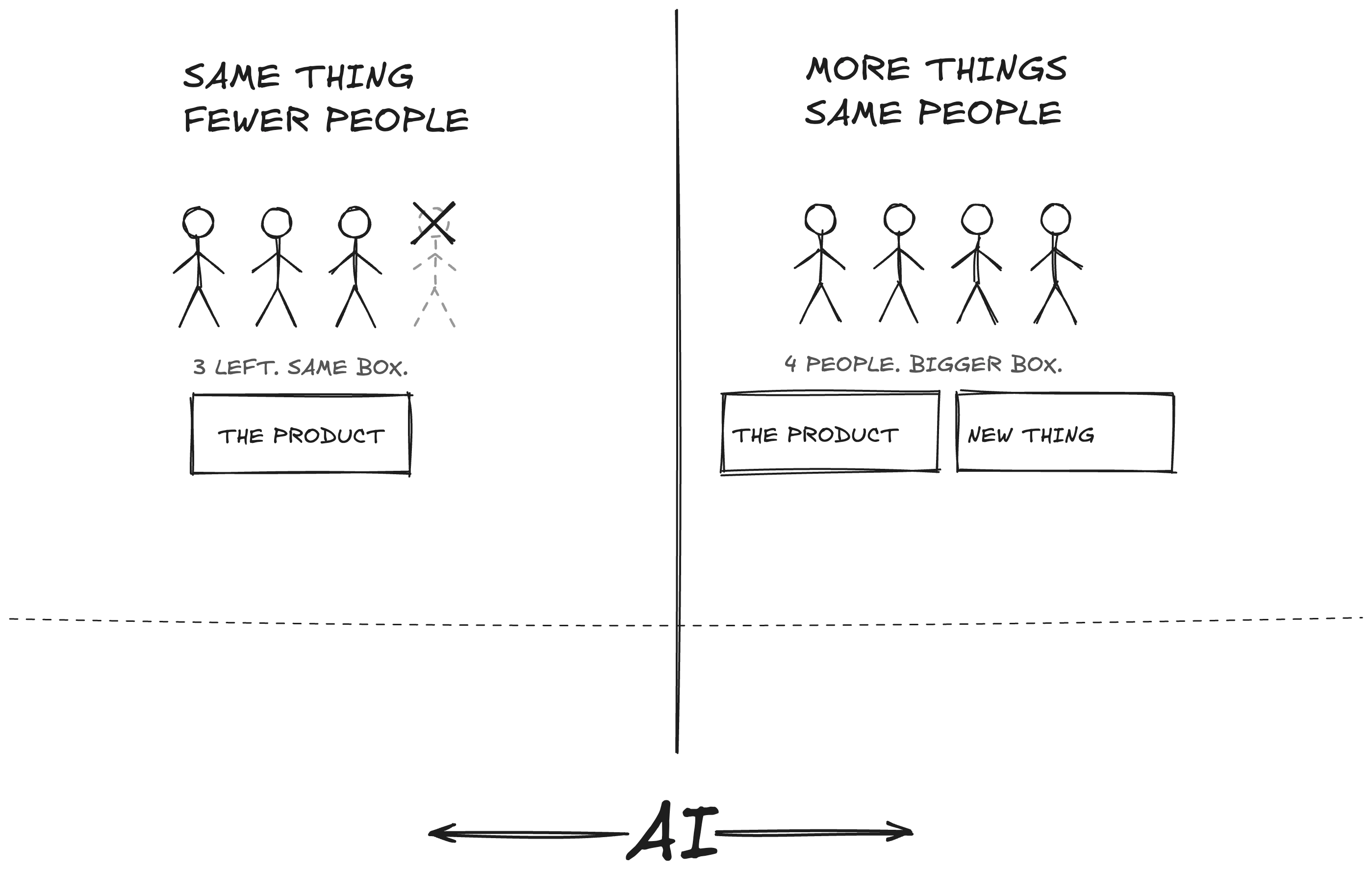
AI Expands What You Can Build
I want to be specific here, because vague encouragement is BS.
Since the newest Claude models dropped, I have been committing code to GitHub every single day. Including weekends and evenings. Not only for work. I want to build things and I finally have the tools to do it fast enough to stay interested.
I am also hiring all the time. This week I am interviewing for another analytics engineer on my team. The work is growing. The scope of what we can do in a week now would have taken a month two years ago.
That is what AI does to a team with a direction. It multiplies output. It raises the ceiling on what one person or one small team can ship. It turns “we don’t have the bandwidth“ into a much harder excuse to make.
So when a company looks at that same capability and decides the right move is to cut 15% of its workforce to maintain current output, pay attention to what they are telling you.
They are not optimizing or transforming. They looked at a bigger ceiling and decided they had no interest in reaching it.
That is a product and strategy problem. It’s a leadership failure.
AI handed every company in the world a way to do more. Some took it and used it to do less, cheaper. The ones doing less cheaper already knew they were out of moves.
The Real Leadership Problem
“Doing more with less“ sounds responsible. It gets nodded through in board meetings. It shows up in earnings calls as discipline.
It is a tell for leaders who stopped asking what’s next.
Growth requires a thesis. You need a belief about where the market is going, what your customers need in two years, what you can build that nobody else can. That thesis is what turns a capability like AI into a hiring reason instead of a cutting reason.
When that thesis is missing, every new tool becomes a cost lever. AI shows up and the question leadership asks is “how many people can we remove from the org?“
That question is a symptom. It means the people at the top are managing a position are trying to hold margin on a product they stopped believing in. The layoffs are a controlled retreat dressed up in transformation language.
And the people who get cut pay for that failure.
I have worked with leaders who had a thesis and leaders who didn’t. The difference is obvious inside six months. One type makes you feel like the work is expanding. The other makes you feel like every quarter is a negotiation over who stays.
If you have been in that second environment, you already know the feeling. It sits in your chest in every all-hands.
You Got Pushed Out of a Dead End
I know it hurts. You might have a family to feed, bills that do not pause for your job search, a mortgage that does not care about market conditions. I am not going to tell you it does not sting.
But here is what is also true.
You were working for people who had already given up on their product. The trajectory you were on was going nowhere. The ceiling in that company was coming down slowly, quarterly, in ways that got explained away in town halls.
Getting pushed out of that is an exit from a room that was getting smaller and smaller over time.
The thing that matters now is what you do with the tools in front of you. AI is not going anywhere. The capability is real. I built more things in the last two months than in the two years before them. Some were useful, some were experimental and some were pure jokes. All of them taught me something.
The knowledge you have took years to build. The context you carry about real problems in real businesses is something most people building products right now are guessing at.
Stop waiting for someone to hand you a roadmap. Build something, ship something small. Get your hands moving.
The people who come out of this period ahead treated the disruption as an opening. You got freed from a dead end. That is a brutal way for it to happen. It is still a door.
Final Thoughts
The data professionals who come out of this period ahead made a decision early. They looked at AI and asked what they could build with it. They did not wait for permission or for a company to hand them a strategy, but picked something and started.
The ones who struggled treated AI as a threat to manage. They watched the news cycle, worried about their job, hoped their company would figure it out.
WTF were those companies thinking? Honestly? A capability leap like this comes along once in a generation and the best move some leadership teams could come up with was a headcount reduction.
The tools are cheap and he knowledge you have is expensive to replicate. The gap between what a skilled person with AI can ship today versus two years ago is wide enough to build a product in, start a service on, grow a team around.
I am not special. I am just moving. If you start moving too, you will be surprised how fast the last few months start to feel like the best thing that happened to your career.
More on the Topic
What Charles Darwin Teaches You About Being A Kick-Ass DataOps Professional
Data Engineers Are Becoming MetadataOps Engineers (And You Don’t Even Know It Yet)
This newsletter is funded by paid subscriptions from readers like yourself.
If you aren’t already, consider becoming a paid subscriber to receive the full experience!
See what people say about working with me.
You are more than welcome to find whatever interests you here and try it out in your particular case. Let me know how it went!
Beautifully written! I’m looking forward to the batches of AI-native companies run by humans who multiply their impact with AI, disrupting companies who failed to innovate.