


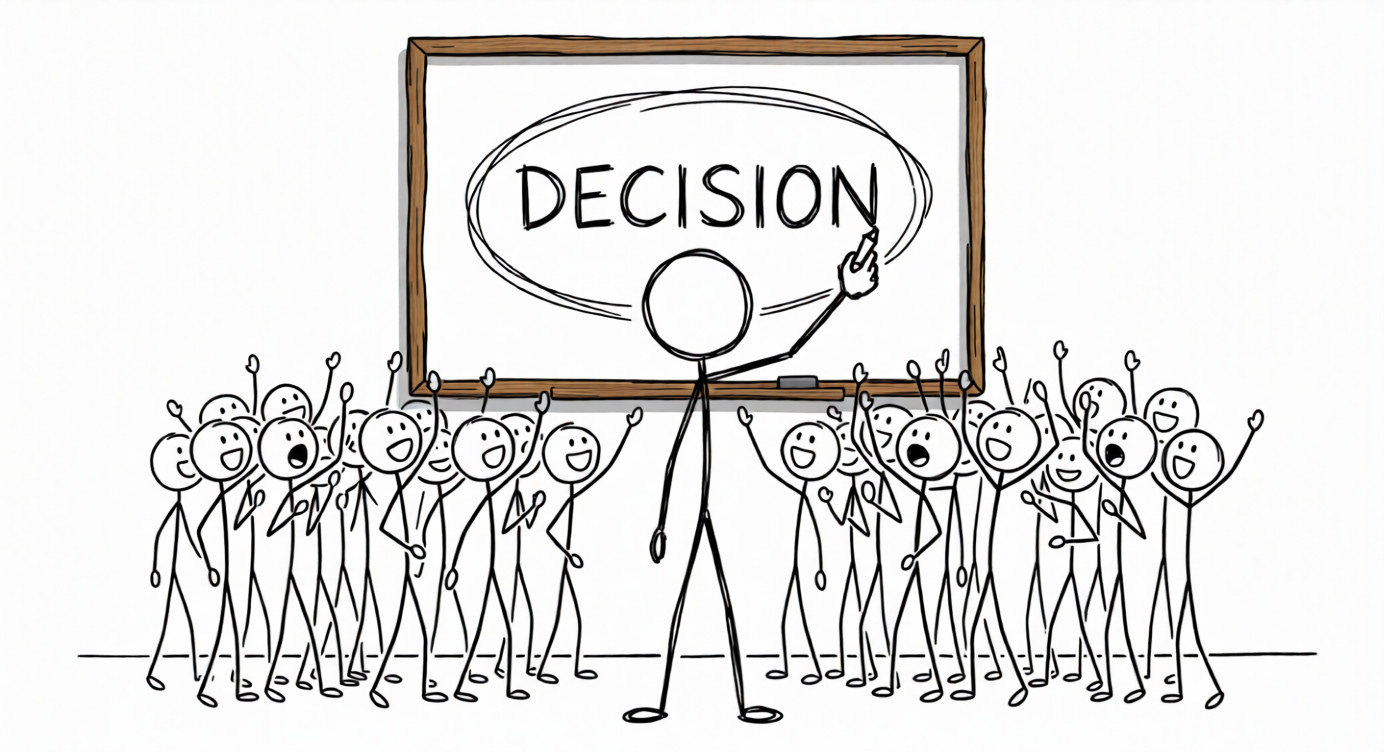
I spent years running meetings where everyone left happy and nothing got decided. I would invite the full project team, present the options, and then spend the next hour trying to find a solution that offended nobody.
The scope would balloon, the edge cases would multiply, and I would walk away calling it collaboration when it was, in fact, avoidance.
The moment I stopped doing that, something shifted. People started treating me differently. Not because I became more aggressive or stopped listening, but because I started owning the call.
I made the decision, explained my reasoning, and moved on. Turns out, that is what leadership looks like from the outside.
Most leaders I talk to know this problem exists. They sit in their own consensus meetings, watching the scope grow and the timeline slip, and they tell themselves they are being inclusive.
They are not. They are distributing the blame before the project even starts, and everyone in that call can see it.
This is how you fix it.
The Group Is Too Big and You Know It
I have seen this play out enough times to recognize the pattern immediately. Someone schedules a decision meeting and the invite goes to everyone who has ever touched the project.
Eight people on a call. Ten people on a call. And within five minutes, everyone is talking, everyone has an opinion, and the person who called the meeting is furiously trying to synthesize it all into something that makes everyone happy.
That is not a decision meeting, but negotiation where the wrong person is doing the negotiating.
The problem starts with who you invite.
When you pull in everyone connected to a project, you are not gathering input, you are gathering stakeholders. And stakeholders do not make decisions, they protect their interests. So every person you add brings their own priorities, their own edge cases, their own version of what the project should be.
Paid members consistently share they got promoted or praised because they apply my guides.
You think you are being thorough. What you are actually doing is outsourcing your judgment to a group of people who were never supposed to own the call.
I watched this sink a multimillion project in 2025. Not because the team was incompetent, not because the technology was wrong, but because every decision went back to the group, every edge case got discussed, and every opinion got baked in.
The scope grew meeting by meeting until the project collapsed under its own weight. Nobody made the call, but everybody contributed to the failure.
