


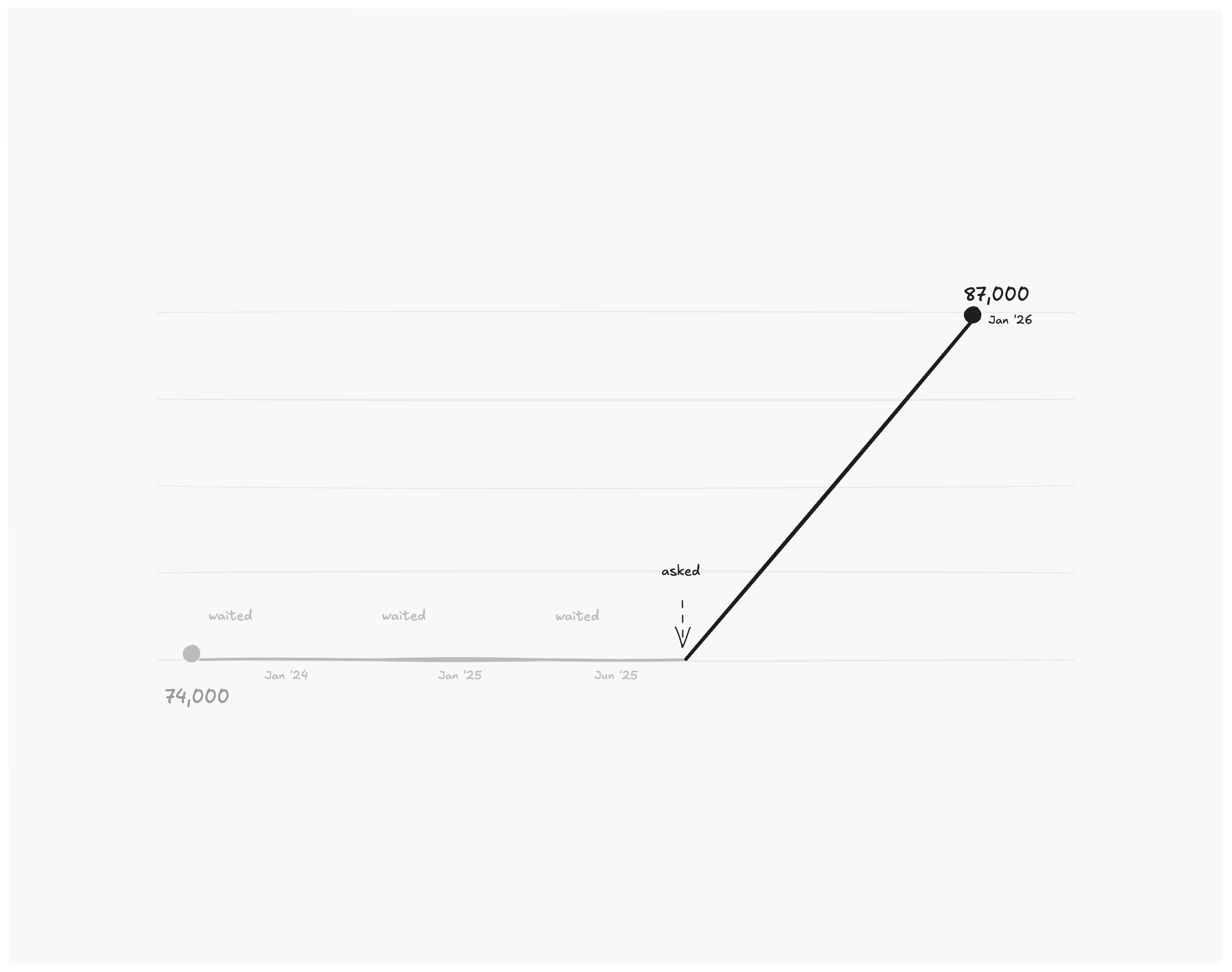
I was coaching Hamza last year.
He was one of the best engineers I had worked with outside my team. Sharp, reliable, the kind of person who fixes the production incident at 2am and never makes it anyone else’s problem. He had delivered more that year than most people deliver in two.
He got a 3% raise in January.
When we talked about it, the pattern was immediate:
He had done everything right technically and nothing right strategically.
He never flagged his expectations.
He had no record of what he had delivered.
He walked into the review meeting with memories and feeling instead of a number.
His manager liked him, but had no ammunition.
Getting a raise has almost nothing to do with whether you deserve one. It has everything to do with whether your manager can build a case for you in a discussion you are not in. The people who get raises are the people whose managers have the data to justify it, the evidence to present it, and the confidence the conversation will stay professional.
The research backs this up. According to Pew, 38% of workers who did not negotiate said they felt uncomfortable asking. The same study found that 66% of workers who did ask got what they asked for. Two thirds. The ask works.
This article is the system Hamza did not have before we worked together.
Download the complete manual at the end of the article.
Why Good Engineers Stay Underpaid
Most of the data engineers I know who are underpaid are genuinely strong. They ship, fix things before anyone notices they are broken, and mentor the junior engineers without being asked. They are the people their companies cannot afford to lose.
And yet they lose money every single year.
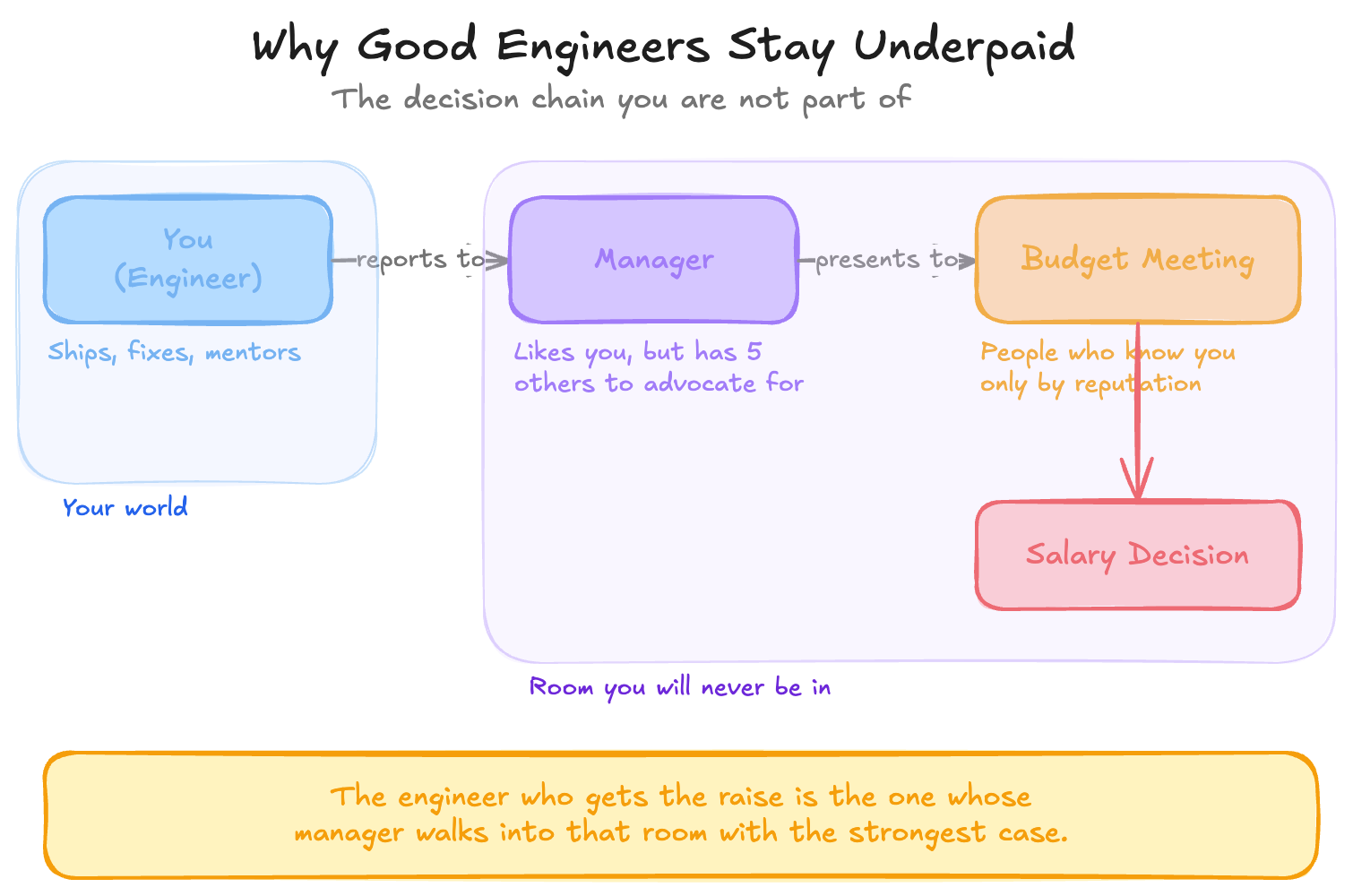
The problem is structural. Salary decisions do not get made by the person who sees your work every day. They get made in budget meetings, by people who know you mostly by reputation, based on recommendations from managers who have five other people to advocate for at the same time.
The engineer who gets the raise is the one whose manager walks into that room with the strongest case.
Everything else is secondary.
The math your company will never show you
Here is something your HR department knows and hopes you never think about:
According to SHRM, replacing an employee costs between 50% and 200% of their annual salary. For senior roles, the Center for American Progress puts that number at up to 213%. Recruiting fees, onboarding time, lost productivity, the six months before a new hire operates at full speed.
Giving you a 10% raise costs them 10% of your salary.
The math is on your side. The problem is you are not using it.
Why the conversation never happens
The Pew Research Center found that 38% of workers who did not negotiate said they simply felt uncomfortable asking. Not a bad manager. Not bad timing. Discomfort is the real enemy.
So engineers stay quiet. They assume good work speaks for itself. They wait for their manager to bring it up. And their manager, who is busy and conflict-averse and assumes you would say something if you were unhappy, never does.
Nobody brings it up, and another year passes.
The 90-Day System
A raise is a system you run across the whole year.
The engineers who get what they ask for flag their expectations early, build a running record of their impact, research their market value before they need it, and invest in the right relationships long before budget season.
By the time the review meeting happens, the outcome is mostly already decided.
The rest of this article walks through each part of that system in full:
How to flag your expectations early enough to actually influence the outcome
How to build a brag list that gives your manager something to fight with
How to find your market number before the conversation
How to win the sponsors who have real budget influence
How to run the conversation itself, including what to do when they say no
This is the system I walked Hamza through. He got a 13k salary increase. Keep reading and download the ebook at the end.
The content below is for paid subscribers. If you are not subscribed yet, this is the part worth paying for.