


This article is part of the Build & Lead Data Teams playlist. Click here to explore the full series.
You are drowning in a backlog that only grows. Last quarter you missed the migration deadline because your lead engineer spent six weeks fixing a broken ingestion pipeline. Now the business wants a real-time attribution model by July, but your team is still manually patching SQL scripts.
You know you need more hands, but simply asking for a generic data engineer is a rookie move that leads to budget friction.
Last week, I showed you how I request headcount increases and consistently get a Yes from my CFO. But before doing that, you must know exactly what profile you are buying.
Hiring the wrong type of help creates more management overhead than it removes. You need a framework to decide if you are building a permanent foundation, performing a surgical extraction, or seeking a map for a new territory.
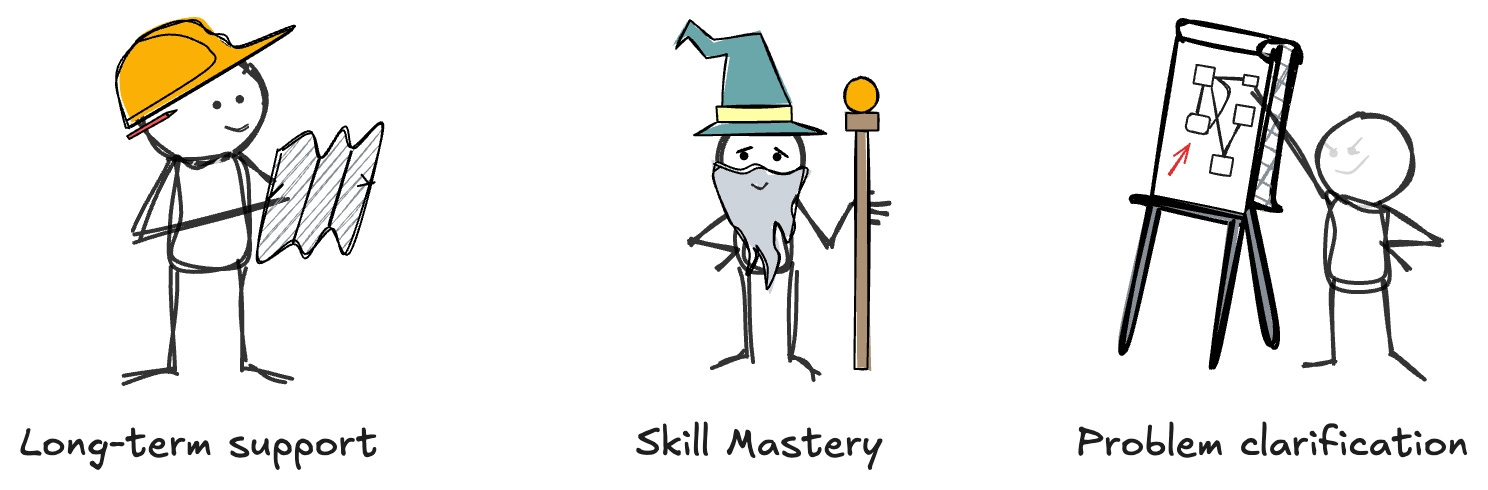
Today, I will show you how to distinguish between employees, contractors, and consultants so you can spend your budget on the right outcomes.
When Do You Hire Somebody Full Time
Full-time employees are more than resource. They are an investment in the long-term compounding of your data platform.
You choose an FTE (full-time employee) when the value of the work comes from its duration rather than its immediate completion. If the role requires negotiating with the Head of Sales every Tuesday or maintaining a core system for the next three years, you need an employee who owns the outcome.
Strategic Context and Ownership
FTEs specialize in the nuance of your specific business logic. While a contractor can build a perfect pipeline, an full-time employee understands why your CRM data has had edge cases since 2019. This deep institutional knowledge allows them to make decisions that prevent technical debt before it happens.
You hire an employee when you need someone to own a domain and live with the consequences of their architectural choices for years.
Cultural Stability and Mentorship
High-performing data teams are built on trust and consistent mentorship. You cannot effectively outsource the professional development of your junior analysts or the soul of your engineering culture.
Employees provide the social glue that keeps a team functioning through shifting priorities. When the roadmap changes or a project is killed, an FTE has the institutional skin in the game to pivot without looking for their next gig.
Long-term ROI and Availability
Hiring a full-time employee is the correct move when the roadmap shows a permanent need for a specific skill set for at least twelve months. You avoid the “switching costs“ of offboarding and onboarding every quarter.
While the upfront cost of hiring is higher, the daily cost of an employee is significantly lower for baseline work. You are buying consistent, predictable capacity for the core functions that keep the lights on and the data flowing.
When Do You Hire a Contractor
Contractors are surgical tools. You bring them in to solve a specific problem, fill a temporary gap, or provide a niche skill you do not need forty hours a week. Unlike an employee, you buy a result instead of a career.
Project-Based Work
If the work has a clear start and end date, a contractor is the logical choice. Building a ClickHouse cluster or setting up Kafka for real-time event tracking are intensive, one-time lifts. You need the expert who has done this ten times before to handle the heavy lifting of the initial setup.
Once the infrastructure is laid and the system is stable, your internal team can handle the day-to-day maintenance. You pay a premium for their speed and specialized experience.
Specialized Expertise
Say you need a world-class performance tuner for a three-month audit of your Snowflake spend. In that case, you do not need that level of seniority or that specific salary on your payroll forever.
Contractors allow you to access “over-qualified“ talent for short bursts. This keeps your internal team focused on the business logic while the specialist handles the complex plumbing that only needs to be touched once a year.
Speed to Hire and Testing the Waters
Onboarding a contractor is often faster than the months-long gauntlet of interviewing for a full-time role. If a critical project is stalled because you lack a specific pair of hands, a contractor can be on-site in two weeks.
This also serves as a low-risk trial. A “contract-to-hire“ arrangement lets you see if the role is actually necessary or if the person fits the team before you commit to the massive overhead of a salary and benefits package.
The Trade-off of Context
The risk with a contractor is the loss of context when they leave. You mitigate this by treating them as a resource for your FTEs, not a silo. Their job is to build the tool and train your team on how to use it. If a contractor builds a foundation and leaves without a knowledge transfer, you hired a liability.
When Do You Hire a Consultant
A consultant is not a pair of hands. You hire a consultant when you have a problem but are not quite sure how to solve it, or when you need a high-level strategy to reach the next level. They fill a knowledge gap, not a capacity gap.
Strategy and Direction
Consultants manage the process of discovery. While a contractor asks for a Jira ticket, a consultant asks why the ticket exists in the first place.
You hire them to analyze your situation and tell you what your goals should be. Whether it is diagnosing why your churn rate is high or designing a roadmap to transition your entire team to a new tech stack, you are paying for their perspective and their past experience with similar failures.
The “Objective Outsider” Effect
Internal teams often suffer from tunnel vision or political fatigue. A consultant provides a “culture neutral“ assessment of your architecture or team structure. They can say the things to your leadership that you cannot say without risking your social capital.
If you need to build a data team from scratch and need someone to design the hiring rubric and initial tech stack, a consultant provides the blueprint so you don’t have to guess.
Transformation and Handover
The goal of a consultant is to provide a solution or a transformation, then leave. They are the architects, not the construction crew. A successful engagement ends with your team feeling empowered to execute the plan they laid out. If a consultant becomes a permanent fixture in your weekly standups, you have accidentally hired an expensive, long-term contractor.
The “Golden Rule” Test
If you are still on the fence about which path to take, ask yourself one question:
If this person left in six months, would it be a minor inconvenience or a total disaster?
A minor inconvenience suggests you only need somebody interim. If you can document their work, hand it off, or hire another specialist to pick up the pieces without the project collapsing, you are looking for a tactical capacity play. Contractors are built for this. They come in, execute the “how“, and move on once the documentation is signed off.
A total disaster indicates you need somebody full-time. This signals that the role is critical to your daily operations and requires a “memory“ that shouldn’t walk out the door when a contract ends.
If the departure of a single person would halt your roadmap or leave the team unable to explain how the core engine works, you have a structural gap. You need a permanent owner who is incentivized to ensure the system survives their eventual departure.
A Few Myths To Bust
Choosing a hiring model based on gut feeling leads to bloated budgets or burnt-out teams. You have to look past the surface-level costs to see the actual impact on your operations.
1. Interim employees are way too expensive
The daily rate of a contractor is higher, but the total cost of ownership is often lower. When you hire a full-time employee, the salary is only the baseline. You also pay for benefits, payroll taxes, equity, and the 4-6 months it takes for them to become fully productive.
An interim professional is a plug-and-play solution. You pay for the days they work, and when the project ends, the cost drops to zero instantly.
2. Contractors aren’t as loyal as permanent staff
Their loyalty is to the result, not the hierarchy. An employee might stay because they like the health insurance or are waiting for a vest date. A contractor’s survival depends on their reputation and immediate delivery.
They are often more focused on hitting your KPIs because they don’t have the luxury of “coasting“ through a performance review cycle.
3. Bringing in an outsider will disrupt our culture
Interims usually provide a culture-neutral perspective that internal teams desperately need. Because they aren’t trying to climb the ladder or win a popularity contest, they can be more honest about technical debt or broken processes. Instead of disrupting your culture, they act as a stabilizing force that allows your FTEs to focus on high-value, long-term work.
4. If I hire a contractor, I don’t have to manage them
Outsourcing work does not mean outsourcing leadership. A common mistake is assuming a high hourly rate replaces the need for context and alignment.
If you don’t provide a clear definition of success and regular feedback, even the best contractor will build the wrong thing. You are still the architect, and they are just the specialist helping you execute the plan.
Final Thoughts
Hiring is a strategic decision, even when it feels like a tactical fix for a capacity gap. Who you bring onto the team, and under what terms, signals your true priorities.
If you hire an FTE for a temporary migration, you are over-indexing on stability for a one-time event. If you hire a contractor for a core system, you are risking your long-term operational memory for a short-term budget save.
You cannot spray and pray with your headcount. You must define success criteria before the first interview or the first SOW (scope of work document) is signed. Know what you want these people to achieve and how you will measure if they are doing it.
Without a plan, you aren’t scaling your team; you are just increasing your management debt. Every hire should solve a specific friction point in your delivery.
Thanks for reading,
Yordan
I can completely relate with that. Each has its own function and are justified in their own ways.