

👷 82 Resources That Will Set You Apart as a Tech Leader
A curated reading list for data engineers and leads who have hit the ceiling on technical growth and need to start growing differently.

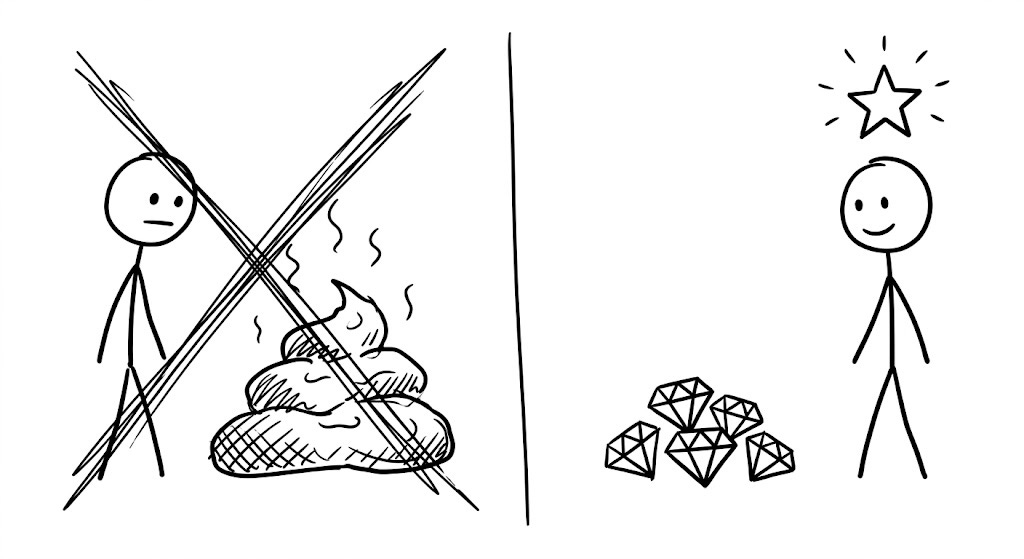
Nobody tells you when your growth stops. You ship things, solve problems, and really get better at the craft. And at some point you look up and realize the bottleneck is no longer the code. It is you. The way you think, communicate, make decisions, understand the systems around you.
That realization is uncomfortable. Most people ignore it. They go deeper into tooling because that is safe and measurable. But the engineers and leads who keep growing past that ceiling are almost always consuming differently. Not just reading docs. Reading things that change how they think.
This is that list.
Newsletters
Technical Depth
Data Engineering Central by Daniel Beach — If you are looking for opinionated writing on the data landscape from a really experienced guy, this is the newsletter for you. Daniel writes a lot about Databricks, DuckDB, Polars, data quality and overall data architecture.
Pipeline To Insights by Erfan Hesami — Erfan shares real-world experiences, technical tutorials, and personal reflections to inspire growth and continuous learning in the world of data and AI. Plus, Erfan is a really great guy.
SeattleDataGuy’s Newsletter by SeattleDataGuy — All things data: end-to-end data flows, MLOps, practical architecture and data leadership. Popular for a reason and consistently useful. Ben has always been nice to me.
The Pipe & The Line by Alejandro Aboy — Hands-on guides, tools, and experiments to sharpen your Data & AI Engineering skills from someone who learned it all in the wild. Loads of practical insights on data and AI here.
VuTrinh by Vu Trinh — Mostly fundamentals here. Vu reads a lot about big corp data architectures and distills it into clean, focused writing. A great place to go deep on the foundations.
From Data to Product by Eric Weber — Eric writes about bridging the gap between data and product thinking. He brings 15+ years of experience, including as Head of Experimentation at Yelp, to questions every data professional should be asking: what does this data work actually enable, and for whom?
Learn Analytics Engineering by Madison Mae — Practical analytics engineering skills, made accessible. Madison writes clearly about dbt, data modeling, and the craft of building reliable data systems. One of the most consistently useful newsletters in the analytics engineering space.
The Data Governance Playbook by Charlotte Ledoux — Charlotte writes about data governance from the inside. Ten years of consulting experience, real client stories, and no patience for governance theater. If you are trying to make data governance actually land inside an organization, this is where you start.
Engineering Leadership & Management
Engineering Leadership by Gregor Ojstersek — One of the most consistent writers on what it actually means to go from engineer to CTO. Gregor went through the whole journey himself, and it shows. I keep recommending this one to people on my team who are starting to think about the leadership path.
Manager.dev by Anton Zaides — Written exclusively for engineering managers. No career advice for junior devs, no motivation content. Just practical, sometimes uncomfortable takes on building and leading teams. Anton is the kind of writer who calls out what most people are too polite to say.
High Growth Engineer by Jordan Cutler — Jordan writes for engineers who want to grow fast and deliberately. The articles are dense with actual frameworks, not vague advice. If you are somewhere between senior and lead and feel stuck, this is where you should be spending your reading time.
The Caring Techie by Irina Stanescu — Irina writes about influence, leadership presence, and the people skills that no one teaches you in a tech job. This is about leading with emotional intelligence without losing technical credibility.
Leadership in Change by Joel Salinas — Joel writes for leaders trying to figure out AI without losing their voice or values. Practical frameworks, no hype. Useful if you are managing teams that are already using AI and trying to lead through that shift rather than around it.
Communication & Influence
Wes Kao’s Newsletter by Wes Kao — Wes writes about executive communication, managing up, and standing out as a high-performer. The frameworks she shares are sharp enough that I have used them directly in conversations with stakeholders. This is the newsletter I recommend most. One of my most favourite of all times.
Strategize Your Career by Fran Soto — Francisco writes about building leverage in your career, or otherwise said, how to stop drowning in the day-to-day and actually make progress on the things that matter. He talks a lot about how you present your work, manage your own visibility, and make the right people notice you.
Hungry Minds by Alexandre Zajac — A weekly newsletter on learning, growing, and communicating as a developer. Alexandre writes with a lot of honesty about what actually works when you are trying to level up and be heard.
Strategy & Systems Thinking
The Data Ecosystem by Dylan Anderson — Dylan bridges the gap between data and business strategy in a way that most data engineering content does not bother to do. If you want to understand how data decisions connect to organizational decisions, this is a good place to start.
The Breaking Point by Sean Byrnes — Advice for leaders on how to make better business decisions. Sean is a founder who has been through the full arc and writes with the kind of hard-won clarity that you only get from having made expensive mistakes. I’ve been a dedicated reader for a few years now and I really this publication.
Data Operations by Greg Meyer — Greg writes about integration, automation, and product challenges through an operational lens. Each issue is a short essay plus one thing that looks like a toy today but might matter a lot tomorrow. Absolutely worth following if you want to think more broadly about how data systems connect to product decisions.
The Pragmatic Engineer by Gergely Orosz — One of the most widely read engineering newsletters for a reason. Gergely covers Big Tech and high-growth company internal. Useful for anyone trying to understand the system they are operating in.
Wondering About AI by Karen Spinner — Karen writes about AI tools with mixed feelings — she builds them and critiques them in equal measure. Useful for leaders trying to cut through the noise and understand what AI actually changes versus what it just hypes.
Product Management IRL by Amy Mitchell — Amy writes weekly about real product management challenges — the messy, stakeholder-heavy, judgment-dependent kind. Useful for data leads because the overlap between PM and data leadership is larger than most people admit.
Career Growth & Self-Awareness
Level Up by Ethan Evans — Former Amazon VP writing about what it actually takes to reach executive levels in tech. No generic inspiration. Specific, earned perspective on how promotions really work, how careers stall, and what to do about it.
Coding Challenges by John Crickett — Learn by building real tools from scratch. John gives you a challenge each week, and the deliberate practice compounds fast. This is for people who want to stay technically sharp while everything else in their role becomes more people-focused.
LinkedIn Profiles
Technical Depth
Joe Reis — I don’t really need to tell you anything about Joe Reis. He’s one of the OGs in the modern data world. Posts on architecture, the state of the industry, and the mental models behind good DE decisions. I love Joe’s contrarian takes because they have substance.
Zach Wilson — Distilled hyperscale DE experience from Meta, Netflix and Airbnb level problems. Skews toward fundamentals and data modeling depth. I disagree with some of his opinions, but Zach Wilson knows his stuff.
Simon Späti — Deep open-source DE content. Curates the ecosystem better than almost anyone. Simon Späti’s site ssp.sh is an underrated resource.
Maxime Beauchemin — Creator of Airflow and Superset. Less active than he used to be, but when he writes it lands. His 2018 essay on functional data engineering is still one of the best things written about pipeline design. Worth reading even if you think you already know the ideas.
Andreas Kretz — He posts consistently about pipeline architecture, data platform design, and the day-to-day of building data systems. Good for staying calibrated on what practitioners are actually dealing with. I’ve never seen a paid video or post from Andreas Kretz.
Julien Hurault — Sharp perspective on the data ecosystem from someone who lives in it. Strong voice in the lakehouse space. You should follow Julien Hurault if you want to stay current on where the tooling is heading.
Dawn Choo — Data scientist (ex-Meta, ex-Amazon) who posts about career development, AI, and the data profession with unusual directness. Dawn Choo is one of the clearer voices on what it actually takes to grow in a data career without the usual hand-waving.
Engineering Leadership & Management
Addy Osmani — Posts a lot about AI-assisted engineering lately, but his older content on team effectiveness and technical leadership is where the real gold is. Addy Osmani is one of the few people at this level who writes openly and accessibly.
Alex Ewerlöf — Staff-plus engineering perspective from someone who has thought very carefully about what technical leadership means beyond the title. Alex Ewerlöf also writes at blog.alexewerlof.com and is worth bookmarking separately.
Anemari Fiser — Writes about the transition from senior IC to leader in a way that feels grounded and specific, not generic. Anemari Fiser is one of the more underrated voices in the engineering leadership space.
Adrian Stanek — Practical takes on the day-to-day of engineering management. Adrian Stanek’s content has a great signal-to-noise ratio, no fluff.
Steven Claes — Leadership through the lens of engineering culture. Posts that make you think about your team differently, not just your own career.
Karl Ivo Sokolov — Managing Director building the Data & AI service line at Specific-Group Austria. Karl Ivo Sokolov talks about data and AI leadership with a practitioner’s frame, not a consultant’s deck.
Communication & Influence
Shachar Meir — Engineering leadership meets communication strategy. Posts about how to get technical decisions across to non-technical stakeholders in a way that lands. Shachar Meir is a great guy.
Carmine Gallo — Communication coach for executives at Intel, Coca-Cola, and Chevron, and author of Talk Like TED. His LinkedIn content distills decades of studying what makes ideas stick in presentations and conversations. If you present technical work to leadership, follow him.
Matt Abrahams — Stanford lecturer and host of the Think Fast Talk Smart podcast. Writes about spontaneous communication. One of the clearest thinkers on how to communicate under pressure.
Clare Kitching — Data and AI strategy consultant with a decade at McKinsey and QuantumBlack. Posts about AI adoption, data foundations, and what it actually takes to make transformation work. Sharp on the gap between what organizations say they’re doing with data and what they’re actually doing.
Strategy & Systems Thinking
Taha Hussain — Systems thinking applied to data and engineering organizations. Taha Hussain posts about how platforms, teams, and architectures interact in ways that most practitioners miss until it is too late.
Vin Vashishta — Data and AI strategy at the organizational level. Vin Vashishta thinks about data differently from most engineers, through the lens of business value, competitive positioning, and organizational readiness. Follow him to develop a more strategic frame for your own work.
Cassie Kozyrkov — Google’s first Chief Decision Scientist, founder of the Decision Intelligence field, now CEO of Data Scientific. Cassie Kozyrkov has over half a million followers for good reason. Posts that make statistical thinking feel urgent and applicable. Required follow for anyone making data-backed decisions at scale.
Career Growth & Self-Awareness
Ryan Peterman — Staff engineer at Instagram who writes about career progression with unusual honesty. Ryan Peterman talks about the parts of growing that are uncomfortable, not just the milestones.
Neo Kim — Author of the System Design Newsletter. Neo Kim has a sharp perspective on what it means to be known for something, how to build a reputation in the field, and how to make technical work visible. Plus, he’s really kind!
Daria Rudnik — Career growth and self-awareness content for data professionals. Daria Rudnik covers the stuff that technical training ignores: knowing your own patterns, managing energy, making better decisions about your own path.
Books
Technical Depth
Designing Data-Intensive Applications by Martin Kleppmann — The foundational text for understanding distributed systems at the infrastructure level. Not DE-specific but irreplaceable for anyone who wants to understand why their stack makes the choices it does.
Fundamentals of Data Engineering by Joe Reis & Matt Housley — The clearest mental model for the full DE lifecycle. Read it to find the gaps in your own mental model, not to learn syntax. Also, the data modelling book is shaping very well.
The Pragmatic Programmer by David Thomas & Andrew Hunt — A classic for a reason. But what makes it relevant here is not just the technical advice. It’s actually is the philosophy of craftsmanship and continuous self-improvement that runs through the whole book. The engineers I respect most have internalized this way of thinking, whether or not they have read it.
Your AI Survival Guide by Sol Rashidi — Sol Rashidi helped IBM launch Watson in 2011 and has spent the years since doing real-world AI deployments across industries. This is not a book about AI theory. It is a book about what breaks when you try to ship AI in an organization and how to fix it.
The Data Hero Playbook by Malcolm Hawker — Malcolm Hawker spent over 25 years working with CDOs and data leaders and got fed up watching the same mistakes repeat. This book is about the mindset problems that sink data initiatives, and how to fix them.
Engineering Leadership & Management
High Output Management by Andrew Grove — Written by the former CEO of Intel, this is still the most rigorous book on management ever written for people who came up through engineering. Grove writes about meetings, decisions, performance reviews, and organizational leverage with the precision of someone who built one of the most operationally excellent companies in history. This book was mandatory for every manager in my org.
The New One Minute Manager by Ken Blanchard & Spencer Johnson — Short enough to read in an afternoon. The core ideas, sound almost too simple until you realise how rarely anyone actually does them. A good early read before you have your first direct report.
The Manager’s Path by Camille Fournier — The foundational text for the engineering management track. Camille mapped out the whole journey from tech lead to VP in a way that actually prepared me for what was coming. Required reading before your first direct report, not after.
An Elegant Puzzle by Will Larson — Systems thinking applied to engineering organizations. Will Larson writes about team sizing, migration strategies, and organizational design with a level of rigor you rarely see outside of academic papers. The org-chart chapter alone is worth the price.
Staff Engineer by Will Larson — If you are approaching the staff level or managing people who are, this is the clearest map of what that role actually looks like across different companies and archetypes.
Resilient Management by Lara Hogan — Short, dense, and written by someone who spent years as VP of Engineering at Kickstarter and Engineering Director at Etsy. Lara Hogan writes about the fundamentals of managing engineers: how to build trust, give feedback, navigate team stages, and grow people without burning them out or yourself. This book shaped a big part of my management philosophy.
Communication & Influence
How to Win Friends and Influence People by Dale Carnegie — Published in 1936 and still one of the most practically useful books on human dynamics ever written. The title makes it sound manipulative. The content is mostly about listening, showing genuine interest, and making people feel valued.
Captivate: The Science of Succeeding with People by Vanessa Van Edwards — Not a tech book. That is exactly why it belongs here. Vanessa Van Edwards is a behavioral researcher who has spent years studying how people actually communicate, build rapport, and earn trust. The frameworks in this book are more applicable to one-on-ones and stakeholder conversations than most “communication for engineers” content I have read.
Cues: Master the Secret Language of Charismatic Communication by Vanessa Van Edwards — The follow-up to Captivate. More focused on the nonverbal and micro-behavioral signals that shape how you are perceived in meetings, presentations, and conversations. Read this one twice. Oh, also, check her YouTub channel!
Never Split the Difference by Chris Voss — A former FBI hostage negotiator writes about negotiation and influence. It sounds like it has nothing to do with data & engineering leadership. It has everything to do with it. This book prepares you for difficult stakeholder conversations, budget discussions, or pushback on scope.
On Writing Well by William Zinsser — A book about writing clearly and with purpose. The kind of writing that gets your ideas across in a design doc, a Slack thread, or a post-mortem without anyone having to read it twice. Most technical writers benefit more from this than from any course on technical writing.
Talk Like TED by Carmine Gallo — Gallo broke down hundreds of TED talks to find what made the best ones land. The result is a practical framework for any presentation where you need to make a complex idea stick with a non-technical audience. Useful every time you walk into a room to justify a platform decision or a team investment.
Strategy & Systems Thinking
Good Strategy / Bad Strategy by Richard Rumelt — The clearest book I have read on what strategy actually is and why most of what gets called strategy in organizations is not strategy at all. Every data lead who has ever sat in a planning meeting wondering why nothing sticks should read this.
The Goal by Eliyahu Goldratt — A novel about a manufacturing plant manager trying to save his factory. Goldratt’s theory of constraints is the most useful mental model I have applied to pipeline architecture and team throughput. Read it once and you will never look at a slow pipeline the same way again.
Playing to Win by Roger L. Martin & A.G. Lafley — Strategy as a set of explicit choices: where to play and how to win. Martin strips out all the planning theater and gets to what strategy actually requires. More rigorous than Good Strategy Bad Strategy and more actionable for people who need to make real platform or team decisions.
The Effective Executive by Peter Drucker — Written in 1966 and still more relevant than most modern management content. Drucker writes about time, priorities, and decisions in ways that apply directly to anyone in a senior technical role. I re-read sections of this every year.
Upstream by Dan Heath — About solving problems before they happen rather than reacting to them after. The mental model maps directly onto data platform design, incident prevention, and technical strategy.
Career Growth & Self-Awareness
So Good They Can’t Ignore You by Cal Newport — The antidote to “follow your passion” career advice. Cal argues that career capital is what gives you leverage, options, and eventually, work you care about. I think about this book every time I talk to someone who is unsatisfied with where they are.
A Few Wise Words by Peter Mukherjee — A collection of success stories from accomplished people across different fields, each sharing in their own words what the journey actually looked like. Peter Mukherjee is one of the smartest and humble people I know.
Man’s Search for Meaning by Viktor Frankl — Written by a psychiatrist who survived the Nazi concentration camps and spent the rest of his life studying what keeps people going when everything is taken from them. The answer is purpose. It’s not a career book. But every engineer I know who has read it has come back with a clearer sense of what they are actually working toward.
The Subtle Art of Not Giving a F*ck by Mark Manson — A blunt, practical argument for choosing your problems deliberately rather than chasing the illusion of a problem-free life. Useful for anyone who finds themselves grinding on things that do not actually matter, or avoiding the hard conversations that do. This book was a blog post, btw.
What Got You Here Won’t Get You There by Marshall Goldsmith — About the specific behaviors that hold successful people back as they move into leadership. Not the obvious stuff. The subtle habits that made you effective as an IC and will quietly undermine you as a lead.
Radical Candor by Kim Scott — How to care about people and challenge them directly at the same time. Most managers do one or the other. Kim Scott makes the case that doing both is not a contradiction, but the job. Read by almost every engineering manager at some point. Worth reading before you need it rather than after.
Thinking, Fast and Slow by Daniel Kahneman — The science of how we make decisions and where we reliably go wrong. Long, dense, and worth every page. Once you understand the two systems Kahneman describes, you start recognizing their fingerprints on every estimation, every post-mortem, every hiring decision you have ever made.
The 5 Elements of Effective Thinking by Edward Burger & Michael Starbird — A short, dense book on how to think better. The book applies directly to how you approach problem-solving, architecture decisions, and career growth. I return to this one more than most.
Podcasts
Data Engineering Podcast by Tobias Macey — The most technically rigorous DE podcast running. Petabyte-scale systems, Iceberg table management, orchestration failures. Consistent quality since 2017.
Soft Skills Engineering by Dave Smith & Jamison Dance — They answer engineering career questions in a format that is somehow both funny and genuinely useful. It covers everything from how to handle a difficult manager to whether you should take a promotion. This podcast actually taught me that it takes more than great code to be a great engineer.
Think Fast Talk Smart by Matt Abrahams — Stanford podcast on communication under pressure. Short episodes, high density. The focus on spontaneous speaking makes it more practical for working engineers than most public speaking content.
Acquired by Ben Gilbert & David Rosenthal — Long-form deep dives into how great companies were built. Not a strategy framework podcast, but something better. You walk away understanding how specific organizations made specific decisions over time. The compounding effect of listening to a dozen episodes is a permanently better sense of how businesses actually work.
The Knowledge Project by Shane Parrish — Farnam Street’s podcast on mental models, decision-making, and the habits of people who think clearly. Every episode is a masterclass in how to reason better under uncertainty. Slow to binge but the kind of content that compounds over years.
Final Thoughts
Do not follow everybody on this list. Do not subscribe to every newsletter. That is not how this works.
Pick two or three sources per category that actually match where you are right now. Follow them consistently. Read them when they land. Let them compound.
Most of the people on this list are not just newsletter writers or LinkedIn creators. They have books, courses, podcasts, YouTube channels, and communities built around the same ideas they post about for free. Once someone’s thinking starts landing for you, go deeper. Find them on every platform they are active on. Buy the book. Take the course. Join the community. The newsletter is usually the smallest part of what they offer.
Two or three resources you actually read will do more for you than twenty you subscribed to and forgot about. The goal is not to consume more. The goal is to think better.
That’s it. 82 resources. Every single one of them will make you better at something.
But there is exactly one newsletter built specifically for data professionals who are done being underpaid and underestimated. For data people who are good at what they do and want the career and the compensation to reflect that.
That is Data Gibberish.
And if you are reading this, you are already in the right place.
—
Yordan
Thanks for the shoutout Yordan!! 🙌🙌 It's a pleasure to be listed here
Thanks for the mention Yordan, very much appreciate being called out along side this list of great resources and names!