This article is part of the Technical Foundations playlist. Click here to explore the full series.
I have seen this pattern repeat across companies and budgets. A team signs a six-figure contract after a clean evaluation. Three months later the pipeline stalls on a limit no one saw coming. The tool works exactly as designed and the design was hidden.
If I need to paraphrase Heraclitus, I’d say: “The only constant in data is change“. Change is good. Change brings innovation. Your organisation changes and so its demand for data. Your data stack need to change to meet this demand.
Data teams live in migration cycles. That part is normal. What is not normal is changing tools in the same category every year because the last one collapsed under real load. At that point the cost is sunk, the architecture is brittle, and the team inherits a dependency it did not fully understand.
Not that the salesperson is bad. Their job is to ensure you buy. Your job is to understand how this tool will affect your organisation’s bottom line. Would it just add up to the cost, or help you bring more revenue?
Most of the time, the failure is not hidden in production. It is visible much earlier. It sits in the documentation, in what is missing, vague, or carefully avoided.
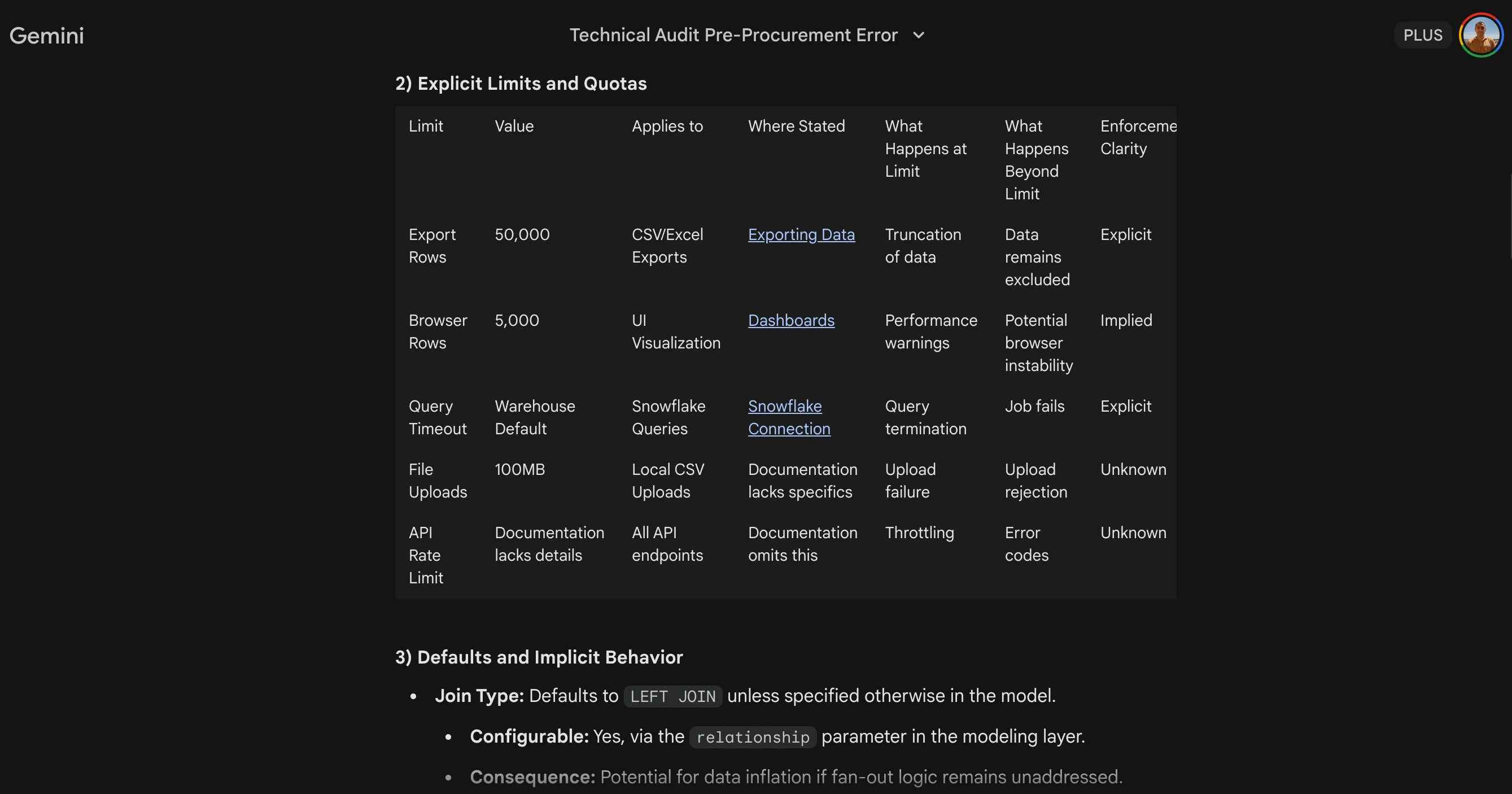
This guide shows how to read vendor documentation as an audit surface. Not to learn how the tool works, but to find its limits, ownership gaps, and operational assumptions before they reach your architecture.
The goal is simple: kill bad tools early, buy known risk and avoid surprise.
Why Documentation Is the Real Architecture Diagram
Vendor documentation reflects incentives. It shows the surfaces they want you to depend on and hides the ones that create support load or contractual risk. Architecture diagrams describe intent. Documentation reveals commitment. The gap between the two is where most production failures live.
When a system matters, its limits are explicit. When limits stay vague or missing, the system relies on you to absorb the edge cases. Docs are not neutral. They are curated. They tell you what the vendor is willing to explain and what they expect you to discover after signing.
If you want to understand how a tool behaves under pressure, stop reading docs to learn how it works. Start reading them to see where the explanation stops.
This is what this framework is all about. And this is how the AI prompt at the end will help you achieve in minutes.