


People often ask me the same question: How do you keep up?
The tech world moves fast. New tools, new frameworks, new cloud features, and now AI on top of everything. Many data engineers worry that if they slow down, they will quickly fall behind or even become obsolete.
The common advice is simple: read more, follow more experts, subscribe to more newsletters. But that approach creates a different problem. Instead of helping you stay informed, it often floods you with noise.
The real challenge in tech today is not lack of information. It is learning how to filter it. That is where an information diet becomes useful.
The Information Problem In Tech
If you work in data engineering, you probably feel constant pressure to keep learning. The field changes quickly, and the amount of new information keeps growing. New tools appear, cloud platforms add features, new architectures become popular, and a large number of blogs, talks, and newsletters try to explain it all.
Trying to follow everything can easily become a job on its own.
High velocity knowledge production
One reason this feels overwhelming is the speed at which new knowledge is produced. The modern data ecosystem evolves very quickly. New orchestration tools, storage systems, query engines, and AI platforms appear regularly. Each release is followed by documentation, tutorials, benchmarks, and opinionated articles about why the tool matters.
If you try to keep up with even a small part of the ecosystem, the amount of material adds up quickly. You might start reading about a new framework, only to see another one appear a few weeks later. Over time, the stream of content grows much faster than you can realistically absorb.
Platform amplification
The way information spreads online makes the situation worse. Platforms like LinkedIn, X, and YouTube are built to reward engagement. Their algorithms promote content that attracts attention, which often means content that is new, surprising, or controversial.
Because of this, your feed is often filled with the newest ideas rather than the most useful ones. A recently released tool can suddenly appear everywhere, even before anyone has real experience using it in production. When this happens repeatedly, it becomes difficult to judge what actually deserves your attention.
Social pressure
There is also a social effect that shapes how you see the field. When you scroll through social media or attend conferences, you mostly see what other engineers choose to share. People post about the new tools they are exploring, the architectures they are building, and the research they are reading.
What you rarely see is what they decide not to follow. Because of that, it can easily feel like everyone else is keeping up with everything new in data and AI.
In reality, no one is doing that. The engineers who try often spend so much time consuming information that they struggle to extract real value from it.
The Paradox of Staying Current
When you feel the pressure to stay current, the natural reaction is simple: you try to follow more sources. You subscribe to more newsletters, follow more people on social media and bookmark more blogs and podcasts.
If you consume more information, you should become more informed, right?
Wrong!
When you increase the number of inputs, you reduce understanding. Every new source competes for your attention. The more information you consume, the harder it becomes to identify what actually matters.
Over time you start collecting fragments instead of knowledge. You read headlines, quick takes, and summaries of tools you may never use. You recognize names and trends, but you rarely spend enough time with an idea to truly understand it.
You can see this pattern everywhere in tech. One week your feed is full of a new database, the next week everyone talks about a different orchestration tool. A month later it is a new AI framework. Each trend replaces the previous one before anyone has had the time to learn it properly.
This creates the illusion of learning. You feel informed because you see many ideas pass through your feed, but most of them leave as quickly as they arrive.
At the same time, the cognitive cost grows. When your attention is constantly divided across many inputs, it becomes harder to think deeply. Your decisions get worse, and your focus weakens. Even though you spend more time consuming information, you extract less value from it.
That is the paradox. When you try to follow everything, you actually become less informed.
Staying current is not about increasing the amount of information you consume. It is about learning how to protect your attention.
The Information Diet
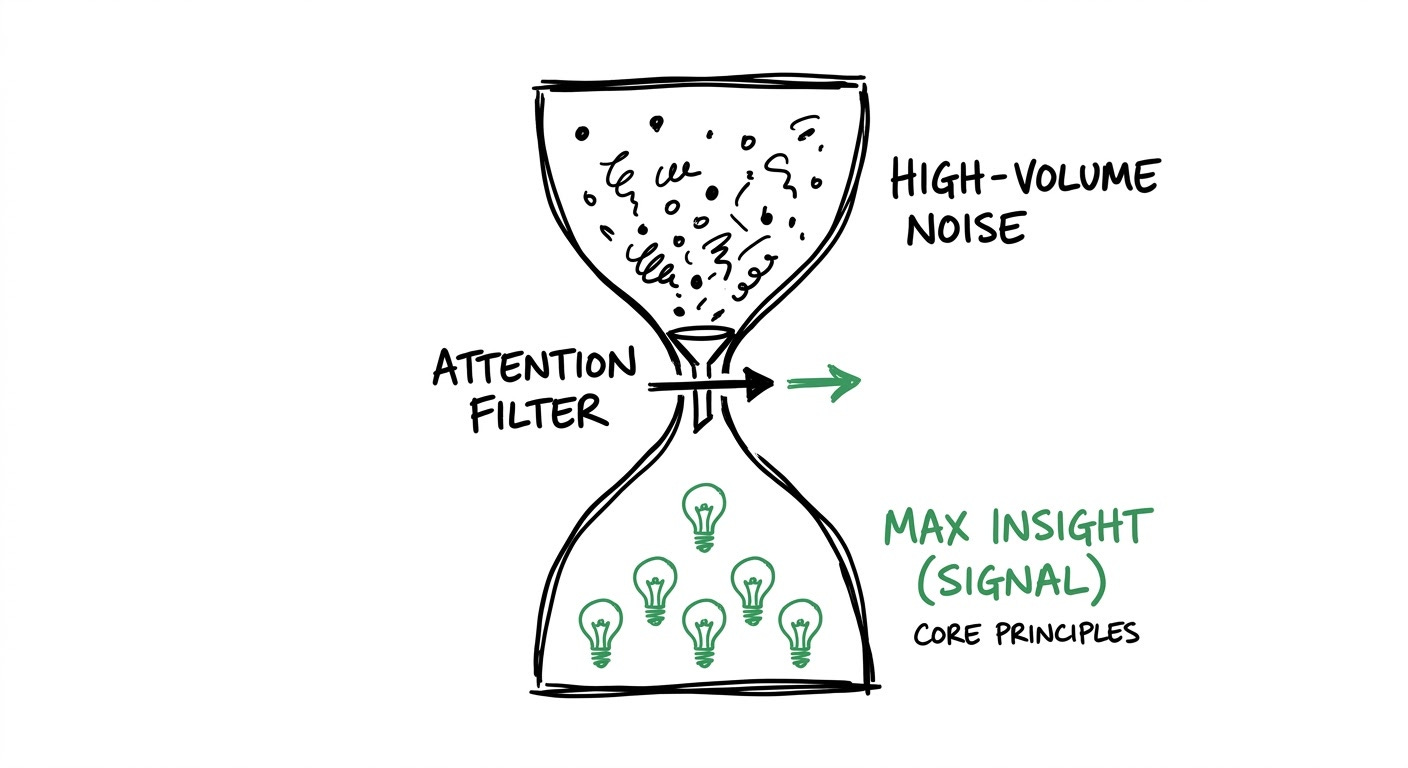
If attention is your most limited resource, then the real goal becomes clear. You need a way to convert attention into useful insight as efficiently as possible.
This is where the idea of an information diet becomes useful.
Most engineers try to increase the amount of information they consume. They subscribe to more newsletters, follow more experts, and add more blogs to their reading list. It feels productive, but it rarely improves understanding.
The real objective is different. You want to maximize insight per unit of attention.
You can think about it like this: