


This article is part of the Build & Lead Data Teams playlist. Click here to explore the full series.1
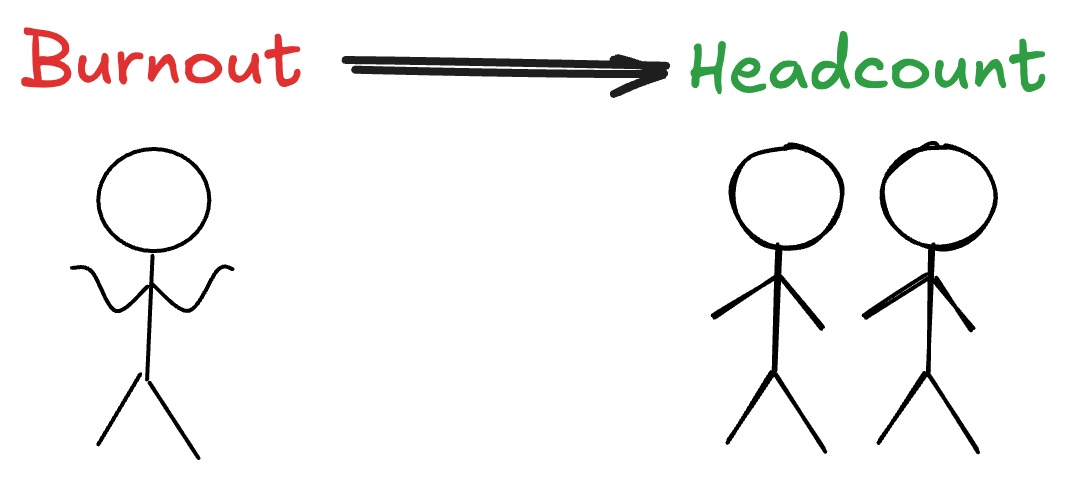
Your backlog can cover twelve months of non stop work and your team is drowning in ad-hoc requests. You tell your manager you are underwater and need help. They tell you to prioritize better or wait until next quarter. You stay stuck in a cycle of burnout while technical debt anchors your throughput to the floor.
You need to work on your pitch. You are likely framing headcount as a solution to your own stress, but your CFO does not fund stress reduction. They fund risk mitigation and growth capacity. If you want a new engineer, you must prove that your current team structure creates a specific, unacceptable bottleneck for the company’s bottom line.
You need to shift from counting tickets to mapping risks and aligning with the business roadmap. This manual shows you how to audit your team and write a proposal that treats headcount as a mandatory dependency for the company’s own goals.
The Volume Trap
You likely think the sheer volume of Jira tickets is your strongest argument for a new hire. You present a mountain of “In Progress“ tasks and a stagnant “Backlog“ as evidence of a resource gap, expecting your manager to see the pile and offer help.
This approach backfires because it signals a lack of leadership rather than a lack of engineers. When you lead with busyness, you invite a lecture on time management instead of a budget approval.
Your stakeholders do not see a capacity problem when you show them a crowded board. They assume you lack the backbone to say No to low-value requests or the technical skill to automate the noise.

By using stress as your primary metric, you position yourself as a victim of your own inability to manage your domain. This framing makes you look like an operator who cannot prioritize, which is the exact opposite of the leader they want to give more resources to.
This obsession with “doing more“2 often leads to the mistake of treating technical debt as a standalone crisis. Your CTO might sympathize with your spaghetti code, but your CFO sees debt as a baseline cost of doing business. They expect you to manage that debt within your existing headcount as part of your daily chores.
Unless you can prove that this debt is the specific physical barrier preventing a high-priority launch, your complaints about “refactoring“ will be dismissed as engineering perfectionism.
So, you must stop asking for relief and start documenting the specific business opportunities that are dying on the vine.
Relief is a personal request, but capacity is a business requirement.
When you ask for a hire because you are tired, you are asking for a favor that can be denied. When you shift the focus to how your current architecture physically cannot support the Q3 revenue goals, you move from complaining to providing a solution for the company’s growth.
The Strategic Headcount Framework
You cannot solve a structural capacity problem with a tactical conversation about your workload. To secure a new hire in this climate, you need a methodology that moves the debate from your team’s burnout to the company’s risk profile.
This is all about providing the business with a clear choice between investment and stagnation.
The framework I use to bridge this gap is built on three pillars: structural audit, strategic alignment, and the risk-based business case.
You start by mapping the hidden vulnerabilities in your current org chart. This moves the narrative from “we are busy” to “we are fragile,” which is a much more potent lever for a CFO.
Once the internal risks are exposed, you align your team’s output with the next twelve months of the company’s roadmap. Because if your request for a new engineer is not tied to a specific, high-priority launch, it will be categorized as a luxury.
Read along to learn more about my framework. But before that, get the full manual with all the scripts and templates that you can use to expand your team.