


I’ve sat in enough roadmap reviews to recognize the pattern. The business doesn’t ask, “What can we learn?” They ask, “Can we all agree on this number?” The tension isn’t curiosity. Especially in low data maturity days.
Most stakeholders already have access to numbers. They have spreadsheets, ad hoc queries, vendor dashboards, and gut feel from running the business every day. They’re rarely blind. What they don’t have is permission to disagree safely once money, targets, and accountability are involved.
That’s where the data platform shows up. Not to surface insight, but to make sure everyone is forced to look at the same thing when they say “Lead”, even if that definition is flawed. Insight creates variance. Platforms exist to collapse it.
Insight Increases Variance
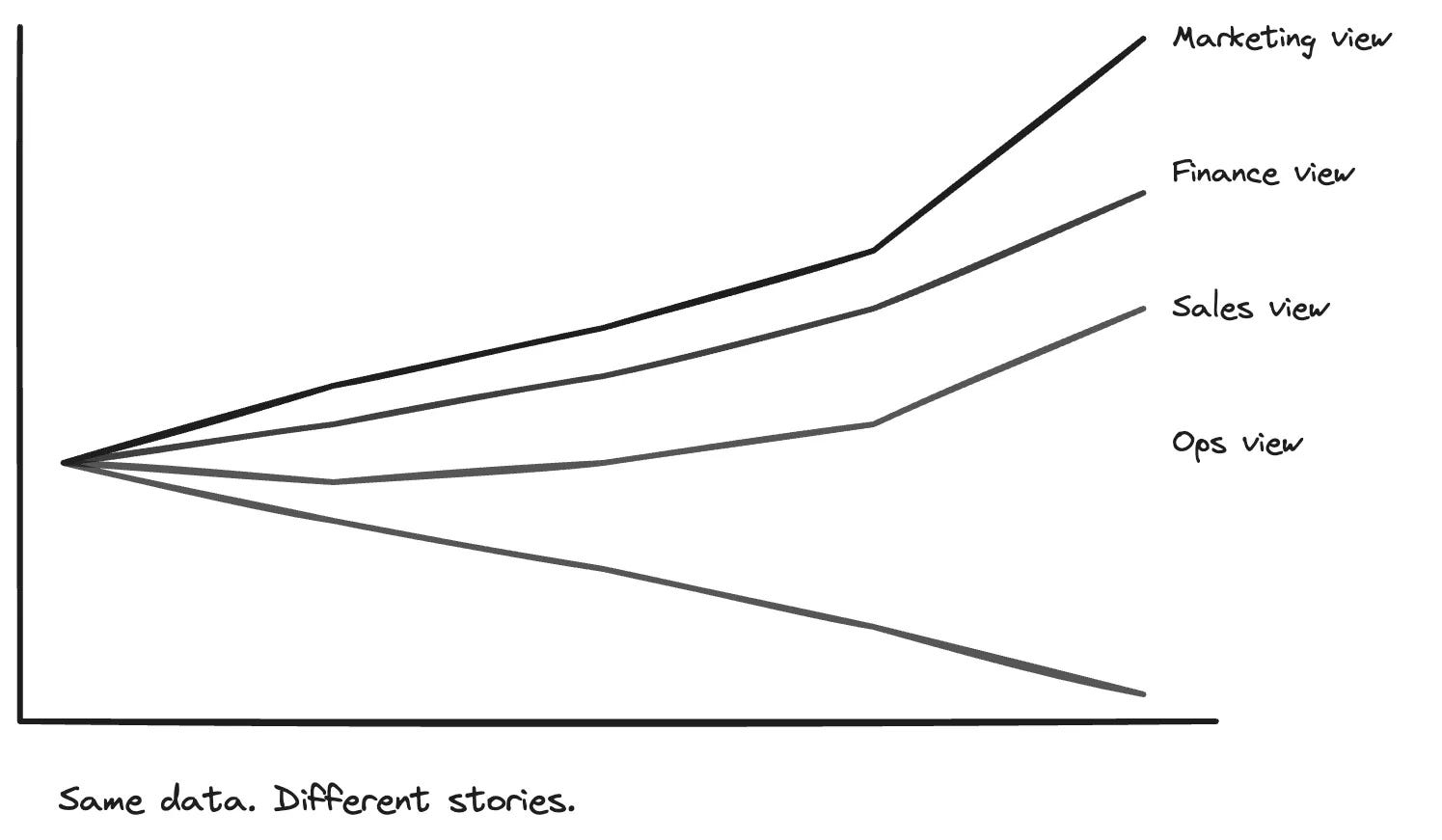
Insight multiplies interpretations. The same dataset produces different stories depending on who is looking, what they own, and what they are incentivized to protect.
That’s the point. Insight expands the space of possible actions.
Organizations struggle with that expansion. Variance slows decisions, complicates accountability, and creates room for dispute.
When stakes are low, this feels healthy. When money, targets, or headcount enter the picture, it feels destabilizing.
So mature organizations narrow the aperture. They converge on shared definitions, shared metrics, and shared views. The goal shifts from learning more to agreeing faster. Insight becomes secondary to coordination.
I’ve sat in enough roadmap reviews to recognize the pattern. The business doesn’t ask, “What can we learn?” They ask, “Can we all agree on this number?” The tension isn’t curiosity. Especially in low data maturity days.
Most stakeholders already have access to numbers. They have spreadsheets, ad hoc queries, vendor dashboards, and gut feel from running the business every day. They’re rarely blind. What they don’t have is permission to disagree safely once money, targets, and accountability are involved.
That’s where the data platform shows up. Not to surface insight, but to make sure everyone is forced to look at the same thing when they say “Lead”, even if that definition is flawed. Insight creates variance. Platforms exist to collapse it.
Insight Increases Variance
Insight multiplies interpretations. The same dataset produces different stories depending on who is looking, what they own, and what they are incentivized to protect.
That’s the point. Insight expands the space of possible actions.
Organizations struggle with that expansion. Variance slows decisions, complicates accountability, and creates room for dispute.
When stakes are low, this feels healthy. When money, targets, or headcount enter the picture, it feels destabilizing.
So mature organizations narrow the aperture. They converge on shared definitions, shared metrics, and shared views. The goal shifts from learning more to agreeing faster. Insight becomes secondary to coordination.
Standardization Is a Governance Choice
Standardization creates a shared surface area for decision-making. When definitions hold steady, outcomes become comparable. When outcomes are comparable, accountability becomes possible. That chain matters more to leadership than discovery.
A standardized metric allows an executive to arbitrate without re-litigating meaning. A standardized funnel allows finance to forecast without contextual footnotes. A standardized dashboard allows performance to be discussed without reopening old debates. These systems reduce cognitive load at the top.
And, funding follows this logic. Platforms that promise consistency offer predictability. Predictability supports planning, budgeting, and consequence. Insight may change minds. Consistency allows organizations to move in one direction at a time.
Definitions Carry Consequences
A definition travels further than a dashboard. Once “Lead” is set, it flows into targets, compensation plans, forecasts, and board narratives. People organize their work around it long before anyone looks at a chart.
This is why definitions attract scrutiny. A small change reshapes incentives. A local exception introduces ambiguity upstream. Flexibility at the edge propagates instability at the center. The platform exists to absorb that pressure and keep meaning fixed.
From the outside, this rigidity looks like resistance. From inside the organization, it reads as protection. Shared definitions make outcomes legible and defensible. They allow decisions to survive contact with scrutiny.
When Platforms “Fail,” the Organization Often Gets What It Wanted
From the data team’s perspective, the platform promised more. More exploration. More questions answered. More leverage from better tooling. Over time, the work gravitates toward standard tables, locked definitions, and carefully governed access.
From the organization’s perspective, this is progress. Fewer surprises. Fewer arguments about inputs. Fewer late-stage reversals caused by dueling interpretations. The system produces stability under pressure.
This gap creates frustration. Data teams measure success by learning velocity. Organizations measure success by outcome consistency. When those measures diverge, the platform looks constrained from one side and dependable from the other.
Over time, this shifts the role of the data team itself. The work stops being about expanding understanding and starts being about deciding which interpretations are allowed to persist.
Once a definition is locked into the platform, alternative readings don’t disappear. They just lose institutional standing. At that point, the platform doesn’t report reality, but authorizes it.
What “Data Maturity” Actually Measures
Maturity is often described as better tooling, cleaner models, and broader access. In practice, it tracks something else. Mature organizations invest in systems that hold their shape under stress.
As stakes rise, tolerance for interpretive drift falls. Leaders want to know that a number this quarter means the same thing it meant last quarter. They want comparisons that survive scrutiny and narratives that remain stable across rooms. Maturity expresses itself as durability.
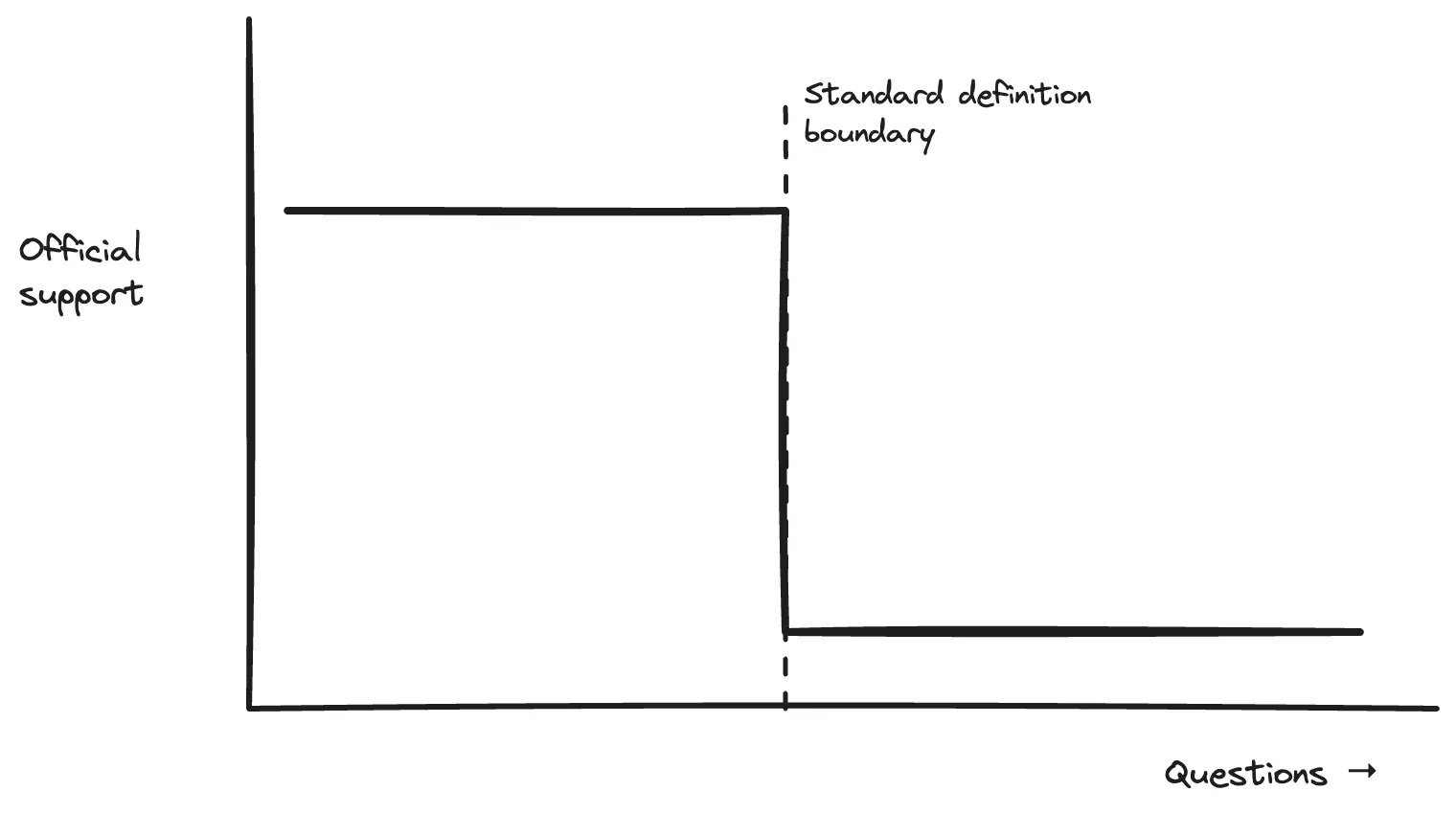
This is why maturity curves bend toward control. The organization learns less per question and argues less per answer. Understanding deepens in some places and flattens in others. What matters is that decisions move forward without reopening the foundation each time.
The Tradeoff Data Teams End Up Carrying
Data teams live at the boundary between exploration and enforcement. They are close enough to the systems to see what could be asked, and close enough to leadership to feel what cannot move. That position creates tension without clear resolution.
Over time, the work tilts toward preservation. Edge cases get deferred. Exceptions get absorbed or rejected. The platform becomes a stabilizing force rather than a questioning one. This shift is rarely explicit. It emerges from repeated contact with incentives.
The cost shows up quietly. Curiosity migrates elsewhere. Innovation moves to spreadsheets and shadow systems. The core platform grows more reliable and less surprising. The organization accepts this exchange without naming it.
At Scale, Data Becomes Infrastructure for Meaning
As organizations grow, shared meaning becomes harder to maintain. More teams, more incentives, more surface area for interpretation. Data steps in as infrastructure, not for discovery, but for coherence.
This is why large organizations invest heavily in platforms that feel conservative. They are buying alignment that persists beyond individual context. The system carries institutional memory forward, even as people rotate through roles.
Over time, data stops being a lens and becomes a constraint. It defines what can be said without explanation. The platform stabilizes language before it stabilizes truth. That tradeoff is not accidental. It is how organizations keep moving while holding their shape.
Final Thoughts
The tension people feel in modern data work often gets misdiagnosed as a tooling problem or a talent gap. It’s neither. It’s a structural outcome of scale. As organizations grow, they prioritize shared meaning over local understanding.
Data platforms sit at the center of that shift. They turn interpretation into infrastructure. They freeze language so decisions can travel without explanation. Over time, this function outweighs discovery, even in organizations that still talk about insight.
This is why data work feels increasingly political and increasingly constrained at senior levels. The job is no longer about revealing what’s hidden. It’s about deciding what must remain stable.
As long as organizations value coherence over curiosity, data platforms will continue to enforce consistency first and ask questions second.
This reframes what the work actually is. Data platforms don’t primarily help organizations see more. They help organizations hold still. They make meaning durable under pressure.
And once that function is visible, the work stops feeling random. It reveals the question the organization has been asking all along.
Thanks for reading,
Yordan
PS: In the paid tier, I turn observations like this into operating playbooks for designing metrics, platforms, and decision boundaries that work in real organizations, without waiting for perfect alignment or ideal incentives.
Killjoy!